
My research crosses the intersection of design thinking, digital technologies, and community engagement—exploring how we can create more inclusive, accessible, and effective communication practices. What drives me is the belief that rhetoric and technical communication research should not only advance our theoretical understanding but also provide practical solutions that help people navigate an increasingly complex digital world.
Over the past decade, my work has evolved from investigating individual design thinking processes to examining how collaborative approaches can address larger social justice issues. This trajectory reflects my growing conviction that the most meaningful research happens when diverse perspectives come together to tackle real-world challenges.
Active Research Streams
I’m currently developing work that examines the intersection of artificial intelligence and collaborative writing, investigating how emerging technologies can support rather than replace human creativity and connection. This research involves partnerships with the Digital Life Institute and scholars from multiple universities and aims to provide practical guidance for educators and practitioners navigating AI integration.
Additionally, I’m exploring cross-cultural applications of design thinking methodologies, working with international colleagues to understand how these approaches adapt and evolve in different cultural contexts. This work builds toward a larger project examining global perspectives on user experience research and community-engaged design.
Forthcoming Publications
- Books: Collaborative writing––guides for workplace teams; histories of design thinking
- Edited collections: Anniversary special issues of Computers and Composition and Xchanges
- Journal articles: Design thinking mindsets; histories and theories of information design; rhetoric and development of graduate student professional identity (NSF funded)
Published Books
2025 – The Rhetoric of Design Thinking: Histories, Theories, and Methods for Innovation in Technical Communication (with Mason Pellegrini) (Routledge/Taylor & Francis) – Order here
This book offers a compr ehensive exploration of design thinking, positioning it as an evolving, multidisciplinary framework essential to advancing technical and professional communication (TPC). Recognizing design thinking as both practice and philosophy, the book traces its historical evolution and theoretical foundations, examining how it operates within and across various fields. The text critically investigates popular design thinking models, highlighting their adaptability and potential for fostering innovation, empathy, and equity in outcomes. It also critiques design thinking as a matter of practice and a reality of life by identifying and challenging the limitations of technologies, tools, and design techniques. Drawing on rhetoric, cognitive psychology, ethics, and technology, the book illustrates design thinking’s capacity to transcend traditional disciplinary silos through new discussions about the power dynamics of design methodologies.
2025 – Designing for Social Justice: Community-Engaged Approaches in Technical and Professional Communication (with Jialei Jiang) (Routledge/Taylor & Francis — ATTW Book Series) – Order here
 Exploring the intersection of design research and community engagement, this book highlights the ways in which design and design theories can be used to address social justice issues and promote positive change in communities. Contributors illuminate the theoretical, ethical, and pedagogical dimensions of design-driven methods in community-engaged projects, exploring their potential to address critical social justice issues such as ethnic and racial justice, gender equality, disability justice, cultural diversity, equity, and environmental justice. Chapters examine various aspects of community-engaged practices, including the use of design theories to fuel social justice work in community partnerships, ethical issues surrounding the use of multimodal resources and new media technologies, and pedagogies for promoting social change. Addressing the opportunities and challenges of design and design methods in community engagement, this collection offers suggestions for promoting social justice through technical and professional communication activities and pedagogies.
2024 – Keywords in Making: A Rhetorical Primer (Parlor Press) – Order here
 From “Accessibility” to “Visual Semiotics,” from “Augmentation” to “Writing Studio,” and from “3D Printing” to “Wireframing,” sections of Keywords in Making demonstrate how words, semantics, and terminologies create and sustain a particular discourse community consisting of makers and designers. This edited collection aims to be a lexical resource for rhetorical inventors and technical communicators, including writers, inventors, instructors, and program administrators who identify with the maker community. With 100 terms subject to analysis, interpretation, re-interpretation, and expansion, this collection is a primer to research and practice in design and innovation powered by the popular maker culture, education, and movement. Keywords in Making presents a compelling argument for why making matters to rhetoric and technical communication.
2023 – UX Writing: Designing User-Centered Content (with Tharon Howard and Gustav Verhulsdonck) (Routledge) – Order here
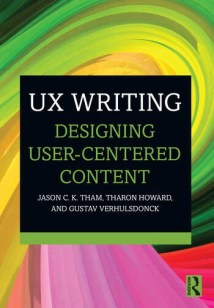 The fundamental goal of UX writing is to produce usable and attractive content that boosts user engagement and business growth. This book teaches writers how to create content that helps users perform desired tasks while serving business needs. It is informed by user-centered design, content strategy, artificial intelligence and digital marketing communication methodologies, along with UX-related practices. By combining writing-as-design and design-as-writing, the book offers a new perspective for technical communication education where UX design and writing are merged to achieve effective and desirable outcomes. Outlining the key principles and theories for writing user-centered content design, this core textbook is fundamental reading for students and early career practitioners in UX, technical communication, digital marketing, and other areas of professional writing.
2023 – Writing to Learn in Teams: A Collaborative Writing Playbook for Students Across the Curriculum (with Joe Moses) (Parlor Press) – Order here
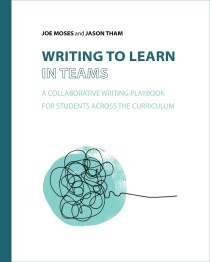 Informed by years of the authors’ teaching experience as well as thorough research on teamwork across multiple settings, this guide effectively brings together the practical, psychosocial, and pedagogical elements of collaboration and collaborative writing. At the heart of the book is empathy—for every member of a writing team as well as for all audience members: the authors know that attitudes and feelings are directly connected to how and why team writing groups work—or don’t. Powered by design thinking principles and agile project management, this book is an essential guide for students who find themselves working in teams across the disciplines.
2022 – Keywords in Design Thinking: A Lexical Primer for Technical Communicators and Designers (The WAC Clearinghouse; University Press of Colorado) – Open access
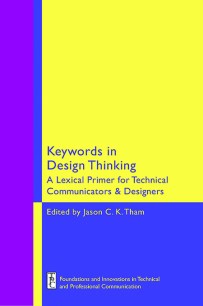 At a time when design thinking is viewed by many as itself a contested term, Keywords in Design Thinking explores keywords and associated practices related to the use of this critical concept in technical and professional communication. The chapters in this edited collection offer definitions stable enough to allow readers to determine the value of design thinking and to apply and examine its usefulness in the design of technical and professional discourse. The contributors to this collection include faculty at research-intensive and comprehensive colleges, graduate students, and industry practitioners. This configuration of contributors is intended to increase the diversity of perspectives and offer a variety of routes to understanding design thinking. This edited collection includes 30 keyword entries pertaining to design thinking activities. Each entry provides contextual background to the key term, sample design applications, pedagogical implications, and recommended resources for further learning.
2021 – Designing Technical and Professional Communication: Strategies for the Global Community (with Deborah Andrews) (Routledge/Taylor & Francis) – Order here
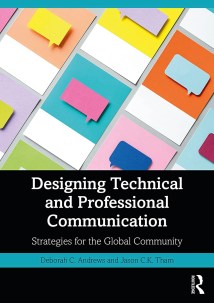 Applying a design thinking framework for solving problems and fostering innovation, this concise and accessible textbook introduces students to the core skills, knowledge, and habits of successful technical communicators who work in the diverse, flexible, and mobile workplaces of the 21st century. Four sections provide concrete guidance for communicating in the global community, managing projects through design, designing content for audiences, and applying design to technical and professional communication. The book presents strategies for communicating professionally and ethically across disciplines, cultures, levels of expertise, and languages, not just internationally but also among diverse populations within a city or region. It integrates advice throughout on communicating in digital spaces and social media as well as exploiting such technologies such as content management systems and workplace messaging apps.
2021 – Design Thinking in Technical Communication: Solving Problems through Making and Collaboration (Routledge/Taylor & Francis — ATTW Book Series) – Order here
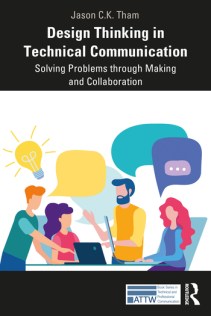 This book modernizes technical communication pedagogy and practice by highlighting the connections and overlaps between design thinking, making, and technical communication. It takes advantage of the recently popularized technology-powered DIY culture called “the Maker Movement” to forward the argument that novice invention can facilitate cutting-edge innovation through user-centered design and collaboration. This book examines the underlying design thinking principles in maker culture that enable social innovation while offering opportunities to cultivate empathy and creative confidence in technical communication students and practitioners. The author draws from expert interviews and three case studies of makerspace development, pedagogical deployment of design thinking, and collaboration in technical communication. These investigations reveal the values of design thinking methodologies for teaching and practicing user-centered design. The author argues for a future of technical communication that sees its constituents as leaders in radical innovation to solve complex problems. This book provides pedagogical as well as practical frameworks to achieving this goal.
2021 – Collaborative Writing Playbook: An Instructor’s Guide to Designing Writing Projects for Student Teams (with Joe Moses) (Parlor Press) – Order here
 Designed to meet demand for tools that help instructors infuse more writing into their courses without increasing their paper workload, the Playbook takes collaborative writing to a new level of productivity and learning. It provides a flexible model for collaborative writing that can be adapted for student projects of any scale. Instructors of composition and technical writing may find this book to be a resource for designing writing and scaffolding activities that help students build confidence in team projects. This book is based on research funded by the Writing Across the Curriculum program and supported by the Center for Educational Innovation at the University of Minnesota.
Theses & Dissertation
Tham, J. (2019). Multimodality, makerspaces, and the making of a maker pedagogy (Doctoral dissertation). ProQuest Dissertations and Theses. PDF available upon request.
Tham, J. (2014). Power and the platform: A phenomenological approach to understanding rhetoric and politics in composition massive open online courses (Master’s thesis). Culminating Projects in English, #47. Retrieved from http://repository.stcloudstate.edu/engl_etds/47/
Tham, J. (2014). Personality and advertising appeals: A new look on the utility of need for cognition (Master’s thesis). Culminating Projects in English, #48. Retrieved from http://repository.stcloudstate.edu/engl_etds/48/
 Jason Tham, Ph.D.